
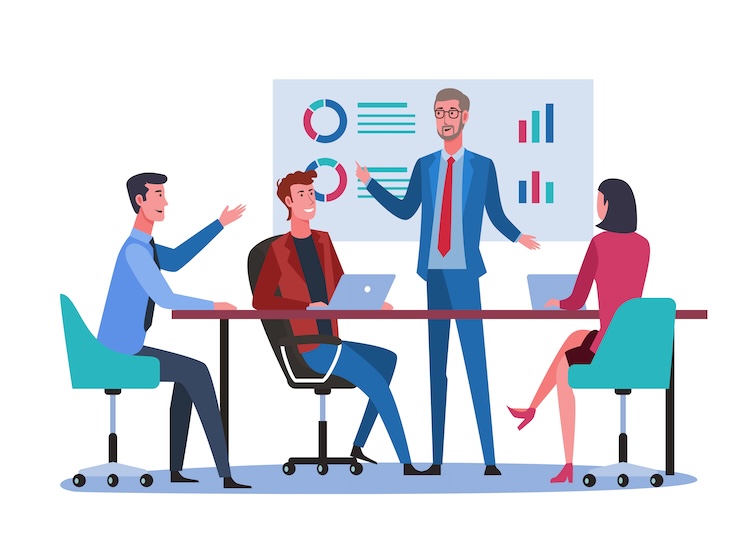
The shift from evaluator to coach is not a soft idea. It is one of the most significant structural changes in how high-performing organizations manage talent.
For most of the history of performance management, the manager’s job was to assess. They observed, they rated, they delivered a score. The system was built on the assumption that evaluation was the point. Get the rating right and everything else would follow.
That assumption has not aged well.
Gallup research found that only 2% of Fortune 500 CHROs strongly agree that their performance management system inspires employees to improve.
The Academy of Management has gone further, arguing that periodic developmental check-ins guided by technology will replace annual appraisals entirely, and that this shift will “truly transform the manager into a coach”.
The model that is replacing the evaluator is the manager as developer. Understanding what this means, and what it requires from your systems, is one of the most important things an HR leader can do in 2026.
What is the Manager-as-Developer Model?
The manager as developer model repositions the primary function of management in performance conversations. Instead of a manager’s job being to measure where an employee is, the job becomes actively contributing to where that employee is going.
In practical terms this means managers are expected to ask different questions. Not “how did you perform against your goals?” but “what do you need to grow, and how can I help remove the obstacles in your way?” It means one-to-one conversations are structured around development, strengths, and career trajectory rather than just output metrics. It means the manager is held accountable not just for team performance, but for the quality of the coaching they provide.
This is a meaningful shift in how the manager role is defined, and it has direct consequences for what performance management tools need to support.
Why this model is gaining ground
Three converging pressures are driving the rise of the manager as developer model.
Roles are changing faster than job descriptions can keep up.
The World Economic Forum projects significant skills disruption across most industries by 2030. In that environment, a manager who only evaluates past performance is not adding much value. A manager who actively develops the skills their team will need in 18 months is a strategic asset.
Employees have changed what they expect from work.
Development and growth have moved up the priority list. Employees who feel their manager is invested in their future are more engaged, more loyal, and more likely to stay. The link between coaching quality and retention is well established in the research, and organizations are starting to treat it as a talent strategy rather than a management nicety.
The annual review model has proven structurally incapable of supporting development.
You cannot develop someone once a year. The Academy of Management’s Peter Bamberger puts it plainly: “These developmental check-ins will reshape the dialogue between managers and their subordinates, truly transforming the manager into a coach.” The cadence of real development is weekly and monthly, not annual.
What this model demands from managers
Repositioning managers as developers sounds intuitive, but it is harder to execute than it looks. Most managers were never trained to coach. They were trained to manage tasks, hit targets, and complete performance reviews on time. Asking them to suddenly operate as talent developers without changing the systems around them is setting them up to fail.
Gallup found that the lowest-rated manager behavior across the board is providing meaningful feedback consistently, and that this is also among the strongest predictors of employee engagement they have ever measured. Managers are not withholding feedback because they do not care. They are withholding it because they are not equipped and the systems around them do not prompt or support it.
For the manager as developer model to work, HR needs to give managers three things.
- A clear framework for what good coaching conversations look like.
- Structured, lightweight tools that make frequent check-ins easy rather than administratively burdensome.
- Data that surfaces what each employee needs, so the manager is not starting the conversation from scratch every time.
What the manager-as-developer model means for performance management systems
The manager as developer model cannot run on an annual review platform. It requires a fundamentally different kind of infrastructure.
- Check-ins need to be built into the workflow, not bolted on. If a manager has to navigate five screens and fill out a form to log a development conversation, it will not happen consistently. The tool needs to make the frequency of good management frictionless.
- Goal frameworks need to flex on a quarterly cycle at minimum. Static annual goals detach employees from business reality within months. OKRs and agile goal-setting approaches that cascade from organizational priorities down to individual contributors keep everyone aligned and give managers something real to coach toward.
- Coaching nudges and performance status dashboards help managers who are still building their coaching skills.
- Skills tracking connects performance to development in a way that traditional appraisal platforms never could. When a manager can see an employee’s current skills, the gaps relative to their role trajectory, and the learning resources available to address those gaps, the development conversation has substance. It is not a vague aspiration, it is a plan.
- 360-degree feedback gives managers and employees a fuller, more accurate picture than top-down ratings alone. When peers, direct reports, and cross-functional collaborators all contribute to the performance picture, the conversations that follow are richer and more developmental.
- The business case is straightforward
Adobe abolished its annual performance review in 2012 in favor of regular manager-led check-ins with no mandatory ratings. Within a year, voluntary employee attrition dropped by 30%. That result was not driven by a new values initiative or a culture program. It was driven by changing the frequency and quality of the conversations between managers and their people.
Organizations that make the manager as developer model work do not just see better engagement scores. They build a capability for continuous talent development that compounds over time. Managers get better at coaching. Employees grow faster. The organization accumulates skills rather than losing them to attrition.
What HR needs to do now
- Redefine what good management looks like, formally and explicitly. If your competency framework still describes the manager’s role primarily in terms of performance oversight, it needs updating. The coaching and development behaviors need to be named, measured, and tied to how managers are evaluated and developed themselves.
- Invest in manager enablement as seriously as you invest in employee development. Coaching frameworks, training on how to have meaningful feedback conversations, and structured approaches to one-to-ones are not soft skills programs. They are infrastructure.
- Choose tools built for continuous performance management, not for annual compliance. The platform your managers use should make frequent, high-quality development conversations easier, not harder. It should provide the data, the prompts, and the structure that enables a manager who is still growing their coaching skills to still show up well for their team.
The shift is already underway
The manager as developer model is not a future aspiration. In high-performing organizations, it is already how performance management works. The HR leaders who are ahead of this are not waiting for their annual review cycle to turn over. They are redesigning the system now.
emPerform is built to support the full manager as developer model, from structured check-ins and coaching nudges to skills tracking and 360-degree feedback, in a single standalone platform. See what that looks like and how you can modernize your performance management program to better align, develop & engage your coaches and team members. Learn more.



Recent Posts